Thomas Brendle – Collector of Folklore Sayings – Old Barn and Tree Comments
Drama is how you define it. Even Shakespeare would tell you that – he doesn’t have to convince you of that truth. But a very recent re-reading of one of the works of Thomas Brendle was one that for me provided a great deal of drama. Perhaps quiet drama in a sense – but real drama, nonetheless. Brendle was one of those very rare collectors of old type Pennsylvania Dutch aphorisms and old time sayings and placed many of those between the covers of a book. He lived in an age where the old German dialect was very much alive and well in southeast Pennsylvania and beyond in the state. The dialect was almost everywhere to be found. I spoke to a fellow in 1994 during my visit to the Mahantango Valley north of Harrisburg – in my search of log constructed barns – who said that teachers and students in his grammar school (elementary school) in the early to mid 1950s still spoke the dialect as a normal course of teaching and learning in those early school grades – 70 years ago.
I moved to Pennsylvania in the Spring of 2000 and in the past 23 years I have met many basically native people – and so many of them have German ancestry in their blood – who still to this day speak the dialect. Currently these people – mostly in their 60s, 70s and 80s and yes – in their 90s (and beyond – I am sure) must number in the many thousands. Terribly sorry but the dialect ‘ain’t’ dead yet. I visited one woman in 2000 or 2001 – A Mrs. Sell (or Seem?) of Upper Milford in Lehigh County, PA who definitely then spoke the dialect. As I recall, she said the dialect was widely spoken – at least in her general area – until about 1965.
I don’t happen to speak the dialect at all. But I certainly wish I did. And if I did, it would enable me to read many documents that are in various collections and it would expand my knowledge of the Pennsylvania German culture in leaps and bounds. Several years ago, however, I was thinking of taking a few courses in learning the German dialect. But if I did that it would take me away from other study and research time in pursuing other things and I did not want to do that – especially it would largely take away from my learning and experiencing any way I could about the rich lore of woodland, forest and tree delights which is ‘crazy extensive.’ This is something that I have vigorously pursued since 1970. And this connection to trees and wood paved the way to my introduction and later furtherance to knowing and becoming intimate with forest riches wherever they may occur. It ultimately led to the writing of this newsletter.
Brendle was just a very few years shy of 50 years old when he started his collection of dialect stories – in the 1936 to 1961 timeframe. TR Brendle’s significant dates are – Sept 1889 to Sept 1966 – he died just before he would have turned 77 years of age. He collected all kinds of elements and items of folklore; his collection filled 93 loose-leaf notebooks with approximately 55,000 numbered items. Mr. Brendle was also Reverend Brendle. He came from a family who was very particularly religious.
Many more things could be said about Thomas Brendle and his life and his very pronounced contributions to German traditions in the state of Pennsylvania. Here, I will divide the comments that he collected that concern barns and trees among many other topics that he included in his book – The Thomas R. Brendle Collection of Pennsylvania German Folklore – Volume 1 – copyright 1995 by Historic Schaefferstown, Inc. – by Brookshire Printing, Inc., Lancaster, PA. I will not include his citations to the names of the people whom he interviewed to obtain old wisdom of local folkways. The references below are almost exactly as they appear in the numbered items in Brendle’s book. I have some quotes (“ ”) in several of the instances below.
Collection of Barn Comments
- As far as the sun shines into the barn on Groundhog Day, the wind will blow the snow into the barn.
- …when the manure pile in the barnyard smells
- “I fenced in the barnyard” in regard to the word – “riggelfens” a word sometimes applied to both the “post fence” and the “stake fence”
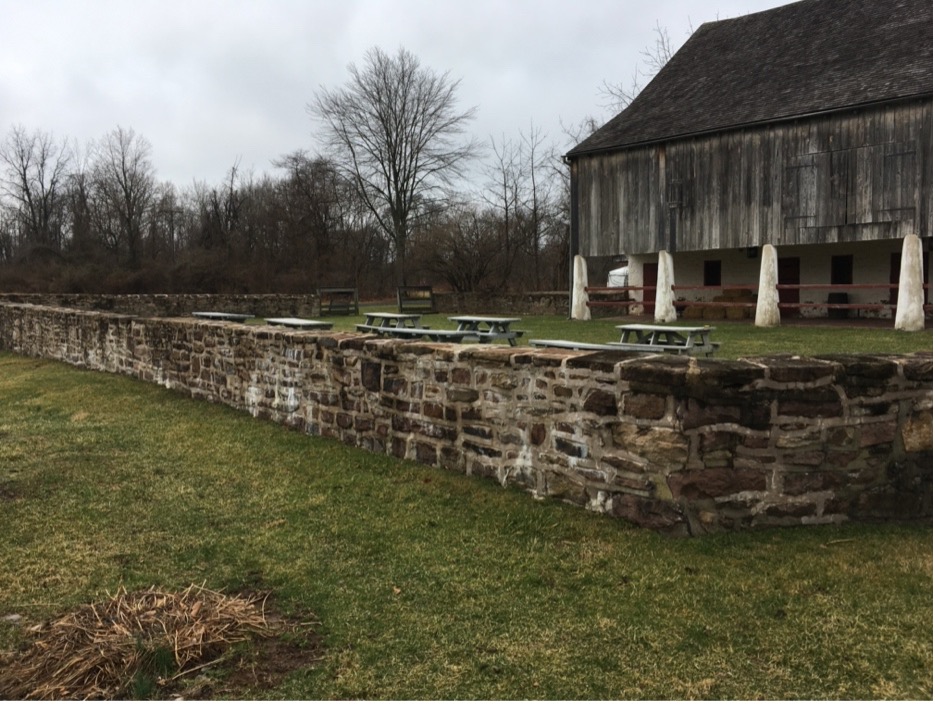
- Guinea hens were regarded as good watch dogs, on account of the cackling when intruders came into the barnyard at night. Chickens (also) had the run of the barnyard.
- “Hoisume” – seed that is found on the haymow or drops to the floor of the barn when the hay is unloaded.
- “Warm April and cool May, one fills the barn with straw and hay.” (from German saying)
- Each cock fights the best on his own dunghill (manure pile in the barnyard) – an extension of the idea – “A person does his best work on his home ground.”
- There is a frame barn beyond Schnecksville on Tamaqua Road in which the side boards have holes 1-2 inches and more in diameter bored in them. There are two or more to each board. The owner tells me that his mother, old Jemima Mickley, says that the boards were shipped by boat and were fashioned together by pegs. There is a barn with similar holes above Romig’s Mill.
- At Keelor’s Church, I was told, there was a funeral. The attendants were scattered all over the place. After the coffin had been brought into the yard, one went towards those that were out at the barn and called to them – “Let’s gather. They now have Henry (the deceased) out in the yard.”
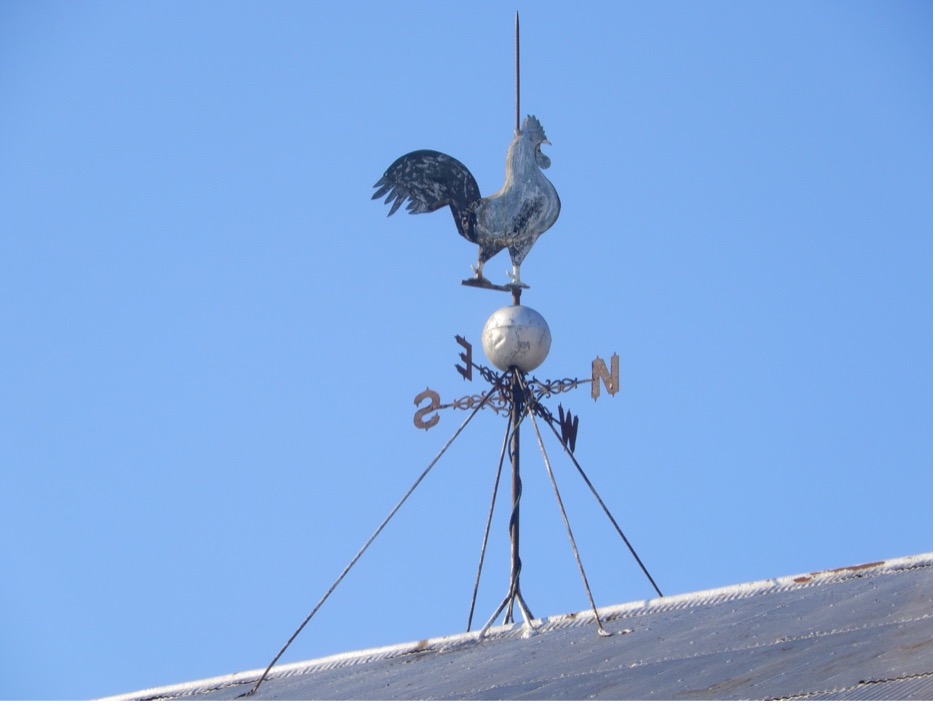
- There are some 50 odd weather vanes on houses and barns in Egypt. A lightning rod is known as a “Gwidderrur, Gwidderrutschrang,” though this latter name is more specifically used for the part of the lightning rod that runs from the roof to the ground. The weather vane is known as the “Wedderfaahne” or merely as “Faahne.”
- “Mischthof”, that part of the barnyard reserved for the collection of manure during the year; or the pile of manure itself. “Mischt schprehe” to scatter the manure in the fields. “Mischtschlidde” – a sled used to take the manure from the stable to the manure heap.
- The church harvest festival of the Dunkards (Google this term) was called “Erndegeme.” It was held in barns which were still full of unthreshed grain. It was held during the month of August.
- The nest of a swallow in a barn is a protection against fire and against lightning (Rather common knowledge)
- John Schupp tells me that “die Schwalme Lecher” (swallow holes in the barn) were made so that birds had a place of refuge in winter.
- Painted barn decorations appear quite frequently on barns on the Lancaster Co. side of the South Mountain all the way up to Brickerville.
- (When one buys a cow, one should place bread and an ax at the door of the cow stable and take the cow across them. Then she will not be homesick.)
- (When one sells a calf, one should take it from the stable backwards. Then the cow will not low – (feel low?)
- Quite small chicken eggs should be thrown backwards over the barn.
- (neck-breaking work) refers not only to dangerous work like repairing a barn roof without adequate protection against falling, but more particularly and more commonly for heavy burdensome work, as of lifting and carrying heavy weights.
- What is the value of locking the stable when the horse has been stolen?
- Gross of Snyder County says there is a taxation that barn decorations are due to the federal tax on windows; that decorations were put on the barn to take the place of real windows. Personally, I believe that there is the remembrance of a federal tax on windows still extant. I do not, however, believe that that is the historical basis for the barn decorations, or for the slatted windows, or for the closed windows, so characteristic of the barns of Snyder and Northumberland counties. Gross says that painting the gate blue when a marriageable daughter was in the home, was done by others besides the Dunkards. His father built a new fence around the house yard and painted the gate blue when his sister was 18 years of age. It proved useless, for she did not marry until she was some 20 years old, and the lover didn’t come through the gate.
Collection of Tree Comments
- “Baschdert” – a scrub woodland; a wet pastureland with scrubby trees.
- The plant “Alder Mann” is not to be planted close to the plant “Aldi Fraa” because “der Alt Mann macht die Alt fraa doot.” (Southern wood kills common mugwort)
- The inner bark of the white oak is used for sprains, as a wash.
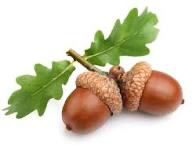
- “A blind hog will occasionally find an acorn, when they’re lying all about.”
- Children in playing would put the double-winged maple seedpods upon their noses with the pretense that they were spectacles.
- It was customary in picking apples from the trees to leave a few apples hanging on the tree (so that when one came by that way it was possible to eat one).
- In the spring the young boys would break off the ends of maple branchlets. Then they placed over the ends to collect the sap. The sap, called “Saft” in the dialect, was known to them as “sugar water.” There were those who bored holes with the gimlet into the bole of the tree and drank the sap with the straws. The real sugar maple was very rare in the lower end of Leb. (Lebanon County) and the tree which was tapped for “sugar water” was Acer saccharinum (silver maple) (Then Brendle says in parentheses: (There is also the cultivated “Silwer Meebel” of town and village.)
- The bark of the sweet birch was chewed, particularly in the spring. It was taken from smaller branchlets. Sometimes a sapling, two to three inches in diameter would be bent over. This would cause the bark to spring loose at the bend and to crack. Thereupon it peeled off in fairly large pieces. Latin Betula lenta.
- The leaves of the wintergreen, “Bruschttee,” Gaultheria procumbus, were chewed. They were also eaten by some persons as a tidbit while roaming in the woodlands.
- The bark of small twigs of apple trees was chewed by some persons. I saw it done by persons who were in the habit of so doing. There is a probability that early settlers by necessity made use of barks and roots. I know of a man who would smoke dried wintergreen leaves with pine needles in lieu of tobacco, when there was no tobacco available.
- “Walnissbrunne” mountain spring, so called because a walnut tree stood by the side of the spring. It is located in the South Mountain, west of Schaefferstown.
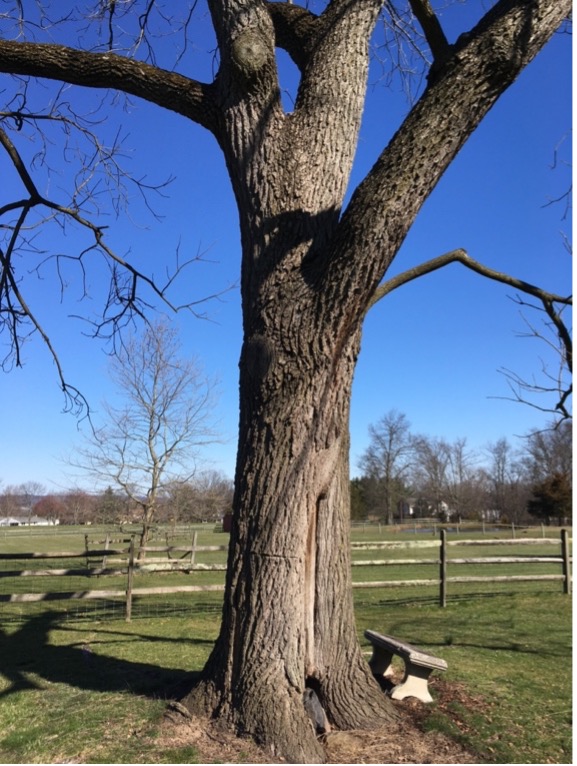
- “Babble Schpring,” a spring near the road that leads from Cornwall to the Lebanon Pumping Station. So called on account of the poplar trees, Liriodendron tulipifera.
- Fishing rods were made of ironwood, with a fork at the end. The line was tied to the middle of the rod and wound around the fork. This enabled the fisherman to let out or retrieve the line by turning the rod.
- To locate a bee tree, a fire was built. After the embers had been burned, a honeycomb was thrown onto the fire. The odor attracted the bees. Honey was offered to them. Heavily laden they rose up and flew toward the bee tree. Their direction of flight was observed and followed. Another fire was built and the same procedure was followed until the bee tree was located. It was cut down in cold weather.
- To collect maple sap, holes were bored in the maple tree, sometimes three or four above one another. The spouts were made of elderberry wood with the pith taken off.
- “Schprus” = hemlock, “Schprustee” is good for colds. Near Weissport.
- Word: “Glofderholz,” cord wood. Common word.
- When the trees long keep their leaves, there will be a long and cold winter.
- Thunder over the dry forest, many people are dying, young and old.
- When the silver maple trees are turned so as to show the underside, there will be rain.
- In some families of Myerstown, Lebanon County, the Christmas tree was left standing with its decoration until Easter.
- George Newhard tells me that he drove two rows of cut spikes into his unfruitful cherry tree to bring it to bear. He believes that it doesn’t bear because it was planted in the “Blumme Zeeche.” (in the sign of Virgo)
- At Miller’s Church the tradition is current that on New Year’s Day, one should shoot into the bole of unfruitful trees to make them bear.
- On “Ashhermittwoch” (Ash Wednesday) wood ashes were sprinkled on cattle to prevent lice – also on the heads and eyebrows of human beings for the same purpose.
- To make unfruitful trees bear drive nails into the roots. (The exposed roots at the foot of the tree.)
- “In die Giwwel.” (Also pronounced “Gibbel”) Into the top of the tree.
- “In der Schtamm graad am Boddem.” (Into the trunk right at the bottom)
- On New Year’s day one should get up and beat the tree in the branches. If one cannot reach the branches, one climbs the tree.
- On New Year’s day one ties bands of straw around fruit trees (around the trunk just below the first branch) so that these trees bear more fruit.
- (planted between the main trunk and the first branch for fruitfulness.) The size of the stone would influence the size of the fruit. (There seems to be some sympathy between the stone and the stone of the fruit.)
- When one transplants a cherry tree, one should set it as it stood before, otherwise it will bear no cherries. A cherry tree turns to the sun.
- One should not point at flowers or at a young fruit on fruit trees. As a consequence of so doing, they will (fall) off prematurely.
- I wonder when these beliefs arose. When I was young, children and even adults would crack hickory nuts with their teeth, always chestnuts.
- As one calls into the trees, so it resounds.
- “When the leaves bit the trees goodby, The days of winter coming nigh.”
- Three hunters wanted to go ahunting an hour before daybreak. Up into the forest green, Into the forest so green.
- (Momma shakes the little tree A dream falls from the tree. Sleep, baby, sleep.)
My promise to readers – If I can find more of these old bits of entrenched pieces of knowledge and experience I will include them in a future issue of the newsletter.